
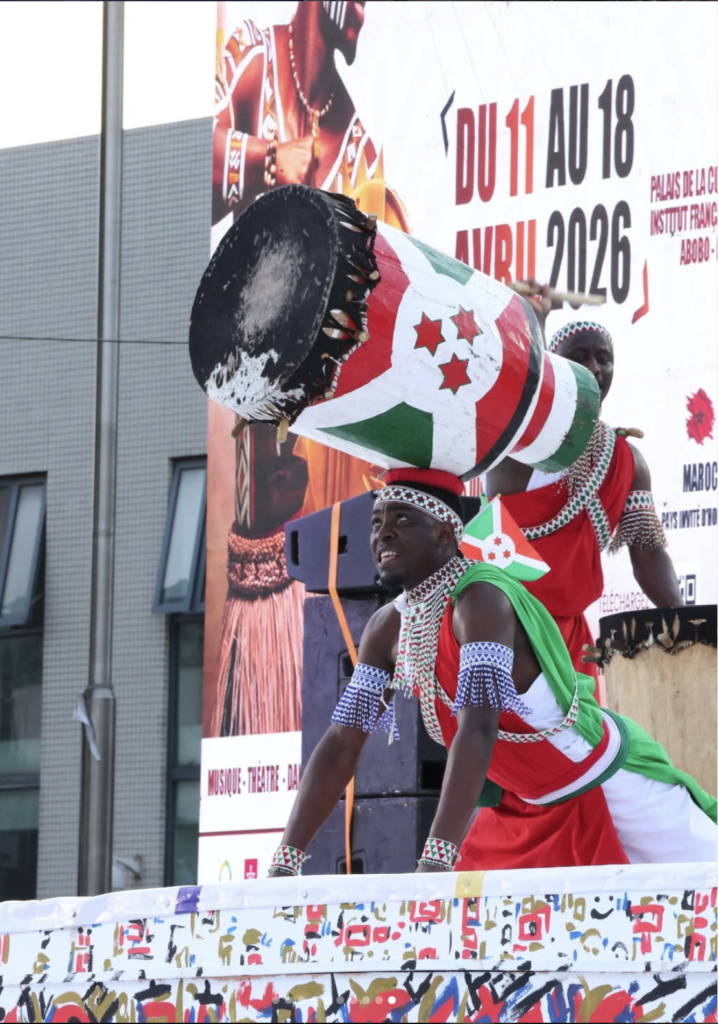
Held biennially in Abidjan, Côte d’Ivoire, the Marché des Arts du Spectacle Africain (MASA) is one of Africa’s leading platforms for the performing arts, combining a professional marketplace, public festival, and capacity-building programme. Its unique role as both a cultural market and public-facing festival makes it a key space for artistic exchange, sector dialogue, and partnership building across continents.
From 11–18 April 2026, the 14th edition of MASA brought together performers, programmers, institutions, funders, and policymakers from Africa and beyond, reinforcing culture as both a creative practice and an economic system rooted in movement, exchange, and opportunity. For Connect for Culture Africa (CfCA), participation provided a strategic platform to advance advocacy around public investment, mobility, professionalisation, and stronger enabling environments for Africa’s Cultural and Creative Industries (CCIs). Jointly implemented by Selam and the African Union, CfCA leveraged MASA to strengthen dialogue, partnerships, and policy engagement that position culture as a development priority.
Mobility as a Structural Priority for African Culture
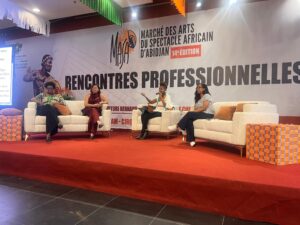
Left-Right: Mantchini TRAORE (Project Manager for CCI and Artistic Cooperation in Africa at the Institut français), Ouafa BELGACEM (CEO Culture Funding Watch), Beatrice WARUINGE (Program Officer, Selam), Diana RAMAROHETRA (Director In-charge of Culture at Francophonie).
One of CfCA’s strongest advocacy moments at Marché des Arts du Spectacle Africain (MASA) 2026 was the cultural mobility roundtable moderated by Beatrice Waruinge, Selam’s Program Officer for CfCA, under the theme “Mobility Support Funds – Mapping and Best Practices for African Artists, Works, and Cultural Professionals.” The discussion repositioned mobility beyond travel, framing it as a foundational condition for cultural production, collaboration, market access, audience development, knowledge exchange, and the circulation of creative works. Mobility was presented as a value chain connected to funding access, intellectual property, residency programmes, touring systems, visa processes, and policy coordination.
The session also reinforced the importance of policy frameworks such as the UNESCO 2005 Convention, Agenda 2063, the Road to Luanda, the KwaDukuza Declaration, the African Union’s 1% budget allocation recommendation for culture, and the African Continental Free Trade Area (AfCFTA). Participants emphasised that for Africa’s creative economy to benefit from inter and Intra-continental integration, mobility must be treated as both an economic and policy priority. Access to information, simplified visa systems, stronger regional frameworks, harmonised mobility policies, and open-access tools such as Africa Mobility Info Point were highlighted as essential to enabling artists to move, collaborate, and participate meaningfully in continental markets.
Public Investment as the Foundation of Sustainable Cultural Ecosystems
Across multiple sessions at Marché des Arts du Spectacle Africain (MASA) 2026, a consistent message emerged: Africa’s creative industries cannot depend solely on short-term grants or fragmented donor support. Discussions highlighted how limited investment across the cultural value chain—particularly in distribution, touring, infrastructure, audience development, and professionalisation—restricts artists’ ability to sustain and scale their work. Public investment was positioned as essential to ecosystem building, enabling long-term growth through support for venues, training institutions, artist welfare systems, mobility mechanisms, and cultural infrastructure. Examples from Morocco demonstrated how policy frameworks and government support can strengthen artist recognition, social protection, and access to funding, reinforcing the critical role of public policy in shaping sustainable cultural economies.
Capacity Building: Strengthening Skills for Cultural Sustainability
Beyond advocacy discussions, MASA created space for partnerships that strengthen cultural professionalisation, reinforcing that strong creative economies require more than talent alone. Sustainable sector growth depends on practitioners equipped with skills in cultural management, business development, fundraising, mobility systems, governance, and institutional sustainability. Through engagement with institutions such as Institut Kôrè des Arts & Métiers (IKAM), Connect for Culture Africa continues to build knowledge ecosystems that support practitioners in navigating both local and international cultural markets, linking policy advocacy with practical sector strengthening.
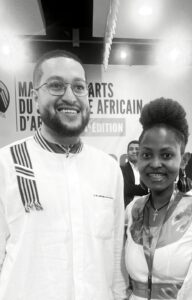
Kéba DAFFE (Director, Institut Kôrè des Arts & Métiers – IKAM) and Beatrice WARUINGE (Program Officer, Selam)
MASA as a Space for Advocacy, Exchange, and Continental Alignment
MASA 2026 reinforced that performing arts markets are more than spaces for showcases and networking—they are platforms where policy, economics, identity, and artistic practice converge. For Connect for Culture Africa (CfCA), participation extended beyond visibility to actively contributing to conversations shaping the future of Africa’s Cultural and Creative Industries. Through engagement with artists, institutions, programmers, and cultural leaders, MASA highlighted the importance of stronger syst