By Nesrine Benyaiche
African women have always been the creators of culture and the shapers of the art field, long before art had a name or became a profitable sector. Before art had institutions, women carried it in their bodies through the clothes they wove; in their hands through the jewelry passed from one generation of women to another; and in their voices through the stories they told as oral heritage and the lullabies they sang to their children. Creation was not separate from daily life; it was how life made sense. Art was not an industry. It was an inheritance.
Yet, like so many other things shaped by women, the moment creativity became valuable and profitable, it was taken out of their hands.
This process began with colonization. Colonization did not only extract land and labor; it reprogrammed taste. It taught us what was considered “elegant,” “classy,” and “serious,” and what was deemed excessive, vulgar, or primitive. Across the whole continent, this process was deeply gendered. What women made became “craft,” while what men made was called “art.”
Traditional crafts, adornment, textiles, performance often sustained and transmitted by women, were either folklorized or dismissed. From north Africa In Algeria, Morocco, Tunisia, and Egypt, to Sub-Saharan Africa in Ghana, Nigeria, Kenya, and Ethiopia women were weavers, embroiderers, singers, dancers, and storytellers. Art flew like a river throughout the whole continent, Their work shaped collective identity. Yet it was never positioned as “high art.” It was domestic, community driven, inherited rather than authored. When art institutions emerged, they were modeled on European systems that privileged individual genius, formal training, and market compatibility spaces from which women were structurally excluded.
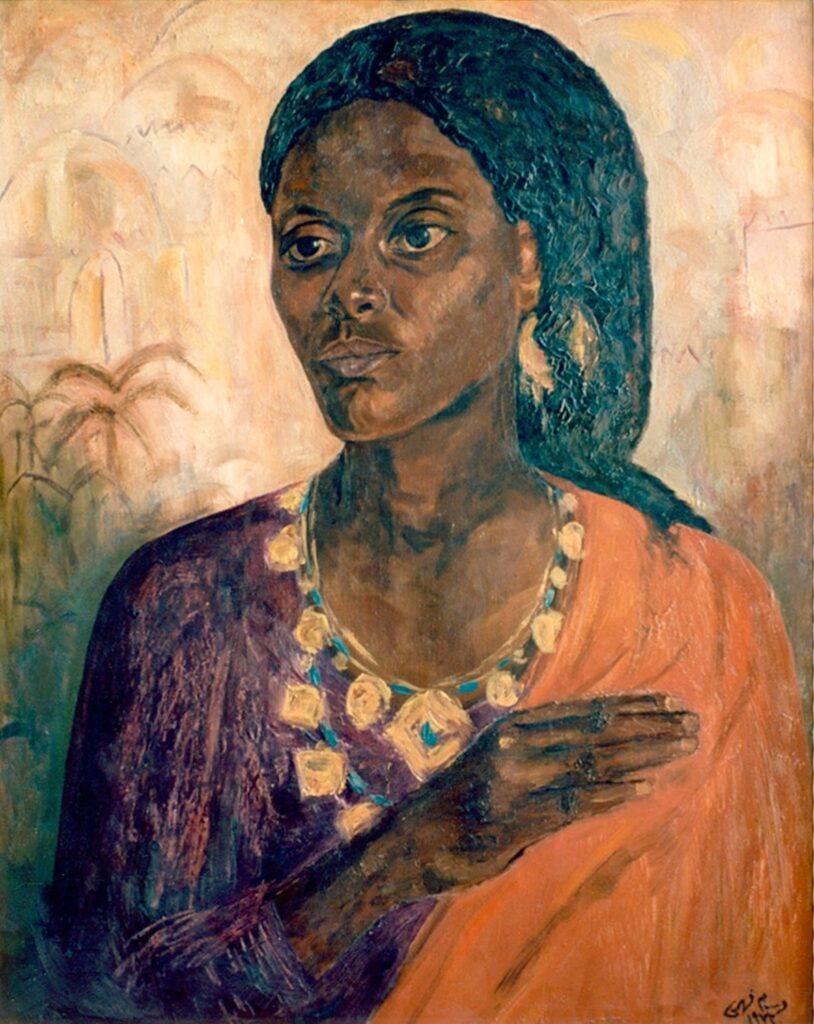
Wissam Fahmy, Fataat Nubia (Jeune femme nubienne), 1973, oil on canvas. Courtesy of AWARE – Archives of Women Artists, Research & Exhibitions.
After political independence, this situation did not fundamentally change. Cultural conditioning remained. Generations grew up believing that to be modern meant to look Western, sound neutral, and tone oneself down. This applied not only to clothing, but to art itself. Women artists learned quickly that to be taken seriously, they had to strip their work of what was considered “too much” too rooted in African identity, too connected to feminine experience. In the same way that colour was disciplined in fashion, women’s voices were disciplined in art.
Meanwhile, men were more easily absorbed into the emerging cultural industries. They were granted authorship, visibility, and institutional backing. Women, by contrast, were expected to be resilient, flexible, and grateful.
Today, Africa’s creative economy is expanding rapidly. Music, film, fashion, visual arts, and digital creation are framed as engines of development, employment, and soft power. This growth narrative is central to continental and regional cultural policy, both in North Africa and sub-Saharan Africa. But growth does not dissolve inequality; on the contrary, it often amplifies it. For all artists, the sector is precarious. For women, it is systematically harder.
Across the continent, women artists receive less funding, fewer commissions, and less long-term institutional support. They are underrepresented in leadership roles, among grant recipients, in festival programming, and in acquisition lists. In North Africa, this is compounded by social expectations that restrict mobility, visibility, and risk-taking. Many women work in informal conditions, self-funding their practice while navigating care work, social scrutiny, and financial instability. Their art circulates, but the infrastructure that sustains careers rarely holds them.
Social media has made women artists more visible than ever. Their work travels. Their images circulate. Their stories inspire. But visibility without protection is exposure. Women artists are often celebrated symbolically while remaining economically insecure. Their labor is consumed without being structurally supported. The market loves their aesthetics, but institutions hesitate to invest in their futures. This is not accidental. It is the result of funding systems that reward familiarity, proximity, and perceived “safety.” Women’s work especially when it is political, embodied, or rooted in societal memory is often framed as risky.
In North Africa, women artists are actively redefining visual language, performance, photography, film, and fashion. They interrogate memory, the body, faith, colonial residue, migration, and gendered violence. Their work is sharp, contemporary, and deeply political. Yet many rely on external funding, short-term opportunities, or personal sacrifice to continue. Local cultural policy often lags behind artistic practice. National funding mechanisms remain opaque. Independent initiatives attempt to fill the gaps left by the state, but they cannot replace sustainable infrastructure. Women are expected to endure rather than be supported.
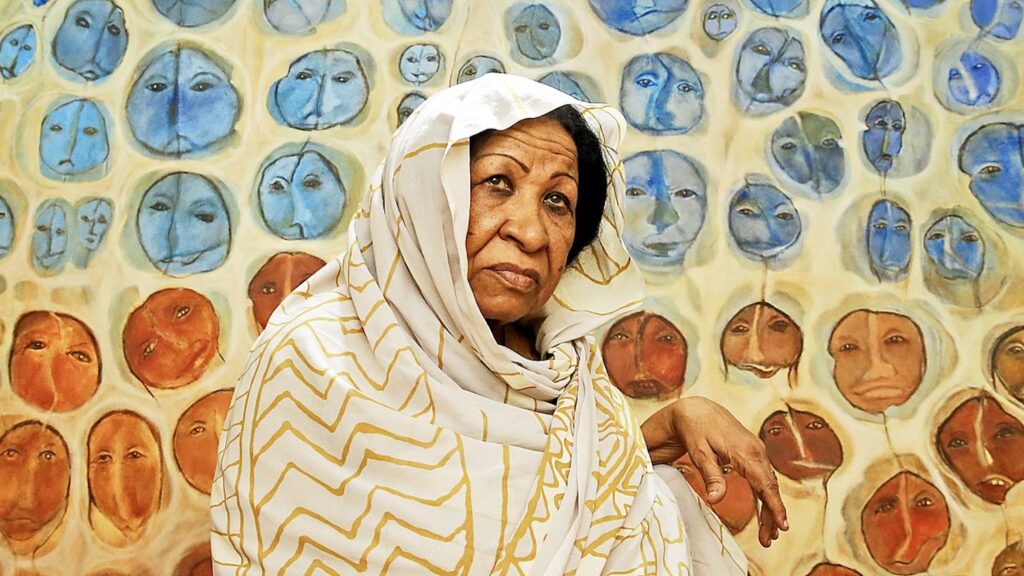
Kamala Ibrahim Ishaq, photographed in 2019. Photo: Mohamed Noureldin / Courtesy of the Prince Claus Fund.
This is why sponsorship is, at its core, a political question. Sponsorship is not neutral. Funding is not simply financial; it is a form of recognition. It determines whose work is preserved and whose voice is allowed continuity. When women are less sponsored, it is not because their work lacks value. It is because cultural policy has failed to account for historical exclusion, informal labor, societal pressure, and gendered access to resources. Like many other fields, the creative sector remains one where women are pushed to the margins and rarely placed at the center.
Without intentional policy, funding reproduces colonial hierarchies of taste and gendered power dynamics. The same systems that once disciplined colour and expression now discipline which art is deemed “investable.” This is why policy is the answer. Supporting women artists requires more than representation; it requires policy as repair.
This means designing funding mechanisms that acknowledge structural inequality, valuing informal and community-based artistic practices, supporting long-term careers rather than one-off visibility, and including women in decision-making processes, not only in programming. What is often labeled as “positive discrimination” is not favoritism, but a corrective measure, an attempt to address historical exclusion and institutional failure. Prioritizing women artists is not about giving advantages; it is about repairing what was systematically denied.
Putting women back at the center of the creative field is not a symbolic gesture. It is a necessary step toward a cultural ecosystem that is honest about its past and capable of imagining a more just future.
Editor’s Note
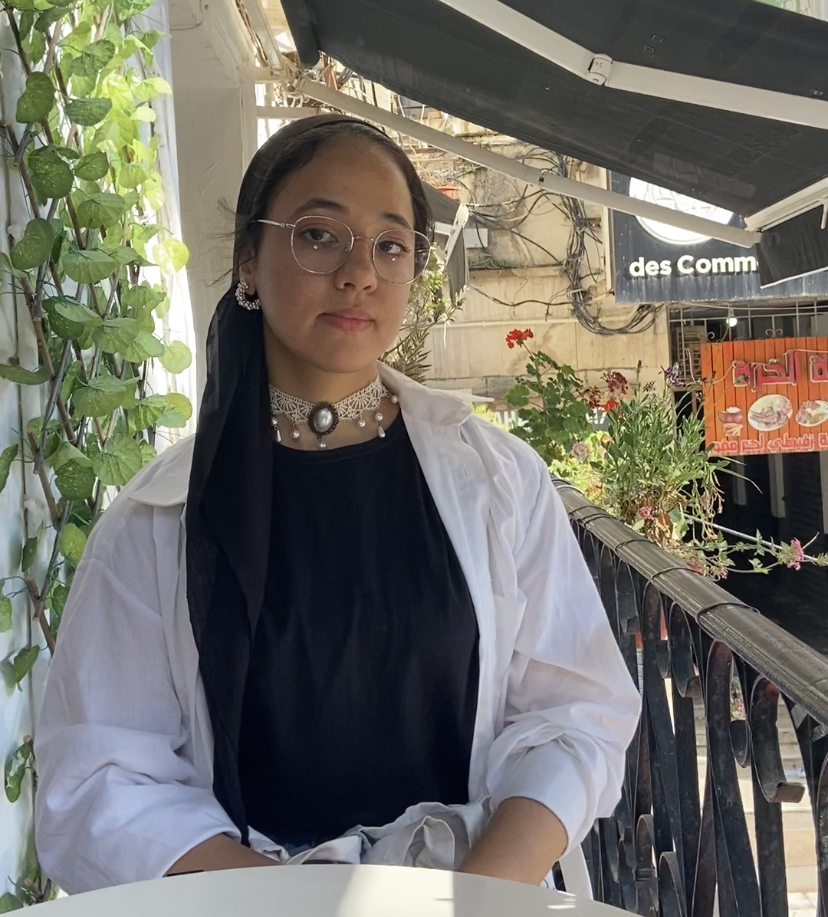
Nesrine Benyaiche, Content Creator, Writer & Feminist Activist, Algeria
Nesrine Benyaiche is an Algerian writer, content creator, and feminist activist whose work examines gender, power, and cultural policy across North Africa. In this piece, she interrogates how sponsorship, institutions, and market systems continue to shape — and often limit — women’s participation in the creative economy. Her reflection reinforces CfCA’s call for structural reform and increased public investment in culture, reminding us that equity in the arts requires more than visibility; it demands policy change.